
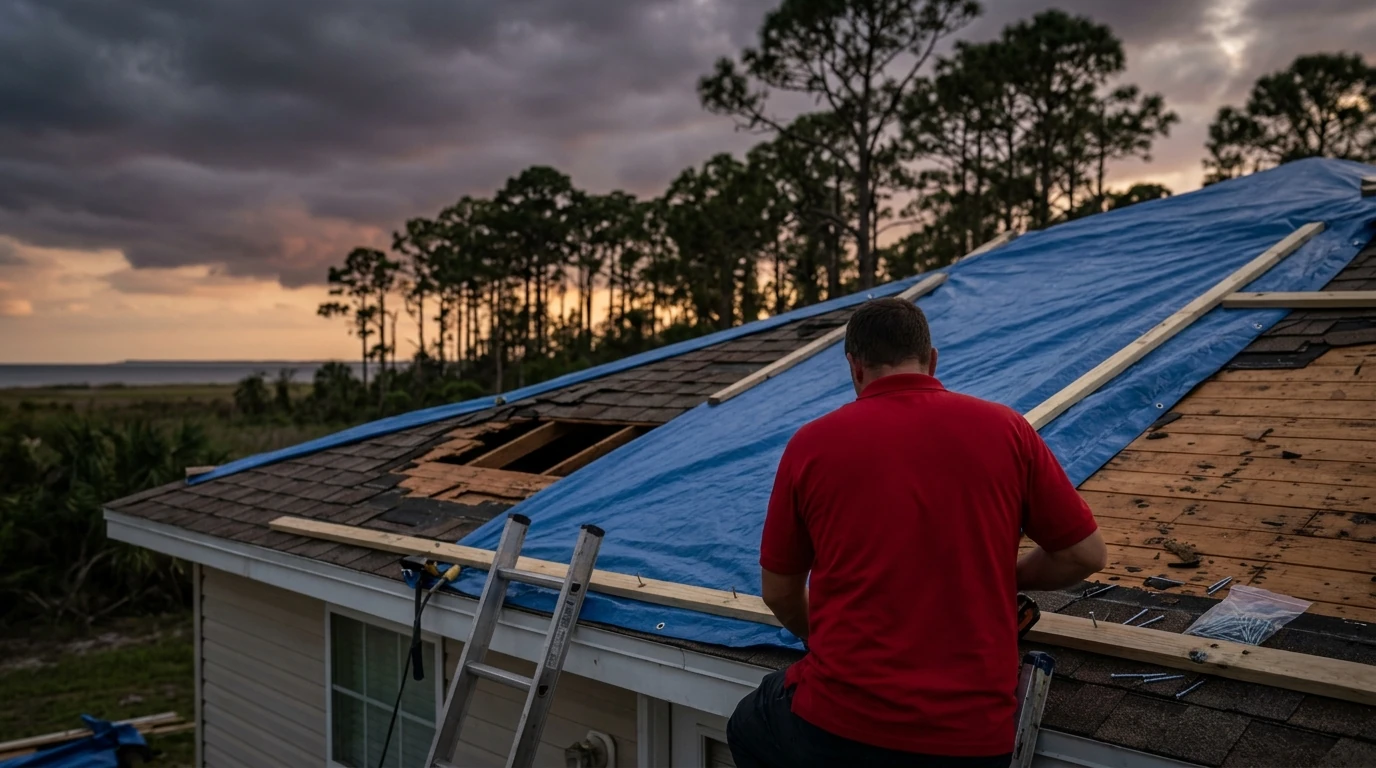
In Gulfport, MS, emergency roof tarping typically costs $300 to $5,000 or more, depending on how much of the roof needs covering, the pitch, and how fast you need a crew on site. A single wind-damaged patch after a thunderstorm might run a few hundred dollars. A whole roof torn open by hurricane-force gusts can run into the thousands before any permanent repair even starts.
If a storm just peeled shingles or decking off your roof and water is finding its way into the attic right now, you need two things fast: a tarp installed well enough to survive the next round of Gulf wind, and photos and paperwork your insurer will actually accept. This guide covers both.
How Much Does Roof Tarping Cost in Gulfport, MS?
Most homeowners along the Mississippi Gulf Coast pay between $300 and $2,500 for an emergency tarp job, with whole-roof jobs after a hurricane running higher. Pricing is usually billed by the square foot of roof covered, plus a trip charge for after-hours or storm-surge demand.
| Scenario | Typical Cost |
|---|---|
| Small localized patch (under 10x10 ft) | $300 - $600 |
| Medium section (10x20 to 20x20 ft) | $600 - $1,200 |
| Large single-slope tarp (20x40 ft+) | $1,200 - $2,500 |
| Whole-roof tarp after major wind event | $2,500 - $5,000+ |
| Steep-pitch or multi-story access | add $200 - $500 |
| After-hours or storm-surge dispatch | add $150 - $300 |
These are typical industry ranges for the Gulfport market, not a quoted price. Every roof and every storm is different, and a reputable crew should give you a written scope before work begins rather than a number over the phone.
What Drives the Price of an Emergency Tarp Job?
The biggest cost factors are roof size, pitch, and how the damage is spread across the structure. A steep, multi-slope roof takes longer to rig safely and usually needs a harness and anchor points, which adds labor time.
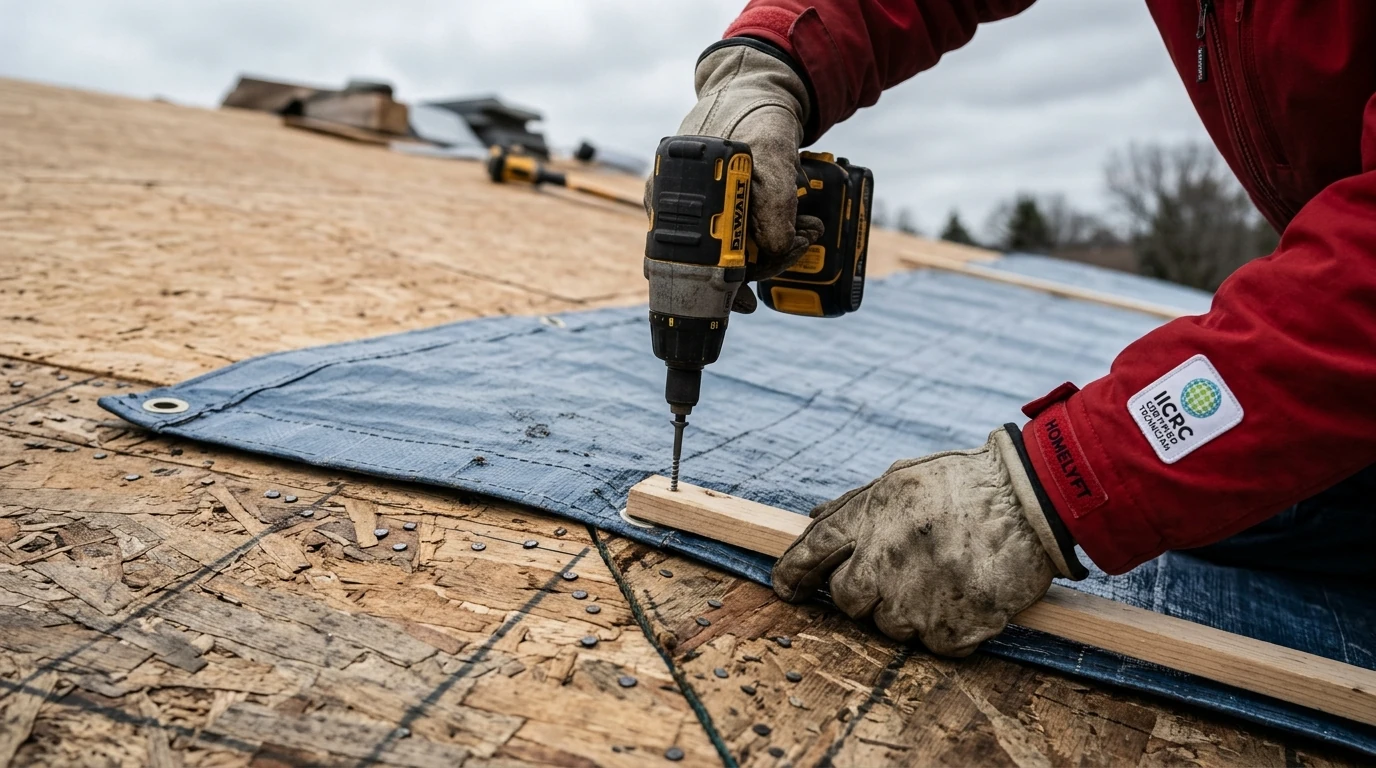
Material matters too. A tarp installed correctly uses heavy-duty reinforced poly, furring strips or batten boards to sandwich the tarp edges, and screws rather than nails, so it survives follow-on wind and rain instead of flapping loose in 24 hours. That extra material and labor costs more up front but prevents a second emergency call (and a second round of interior damage) a few days later.
Timing is the other variable. During an active storm system, when every roofing and restoration crew on the coast is fielding calls at once, demand pushes prices toward the top of the range. Booking an assessment as soon as damage is spotted, rather than waiting, generally keeps the job in the smaller, faster-to-schedule category.
Does Homeowners Insurance Cover Roof Tarping?
Most standard homeowners policies cover emergency tarping because it falls under the policyholder’s duty to mitigate further damage after a covered loss, like wind or hail. Insurers generally reimburse reasonable, documented mitigation costs even before the adjuster inspects the roof in person.
That said, coverage depends on what caused the damage and your specific policy language, so check your policy and talk to your adjuster before assuming a number. Photograph the damage before the tarp goes on, keep the invoice, and note the date and time. That paper trail is what turns a tarp bill into a reimbursed mitigation expense instead of an out-of-pocket cost.
After a federally declared disaster, the U.S. Army Corps of Engineers runs Operation Blue Roof, a free program that installs reinforced blue plastic sheeting on eligible homes while residents wait on permanent repairs. It’s worth checking your eligibility before paying for a private tarp if a major storm has triggered a federal declaration for Harrison County. Outside of a declared disaster, or if you need a faster response than the program’s installation queue allows, a private emergency tarp is the standard route. For general wind-mitigation guidance before storm season, the Insurance Institute for Business and Home Safety publishes homeowner resources on roof durability and storm prep.
For the deeper rebuild-cost picture once the tarp is up, see our roof repair cost guide for Gulfport and our broader storm damage restoration cost guide.
What Happens When You Call for Emergency Roof Tarping?
A properly run tarp job follows a short, specific sequence rather than someone just climbing up with a blue tarp and a staple gun.
- Phone assessment. You describe the damage and location; the crew confirms it’s safe to dispatch (no active lightning, no downed lines near the roof).
- On-site safety check. The technician checks the roof deck for structural soft spots, exposed electrical, and trip hazards before anyone goes up.
- Tarp installation. Heavy-duty poly is cut to size, wrapped over the ridge where possible, and fastened with screws through furring strips, not nails through bare tarp, so it survives wind.
- Photo documentation. Before-and-after photos are taken for your insurance file, along with notes on square footage covered.
- Permanent repair scheduling. The tarp buys time; a licensed roofer scopes the actual repair or replacement separately.
HomeLyft Restoration Gulfport runs this process 24/7 for Harrison County and the surrounding Gulf Coast, and holds Fortified Building Roofing certification for Mississippi wind-storm construction standards, which shapes how the temporary covering is tied in to minimize follow-on leaks.
If your roof is actively leaking and the storm hasn’t fully cleared, get people and valuables away from the affected ceiling area first, then call HomeLyft Restoration Gulfport at (228) 284-5200 to get a crew scheduled and start the documentation your claim will need.
About HomeLyft Restoration Gulfport
HomeLyft Restoration Gulfport is an IICRC Certified Firm serving Gulfport, MS and the surrounding Gulf Coast since 2022, holding Mississippi license RO 2728. Their crews handle emergency board-up and tarping, roofing, storm damage restoration, and water, fire, mold, and reconstruction work across Harrison, Jackson, and Hancock counties, with 24/7 emergency dispatch.