
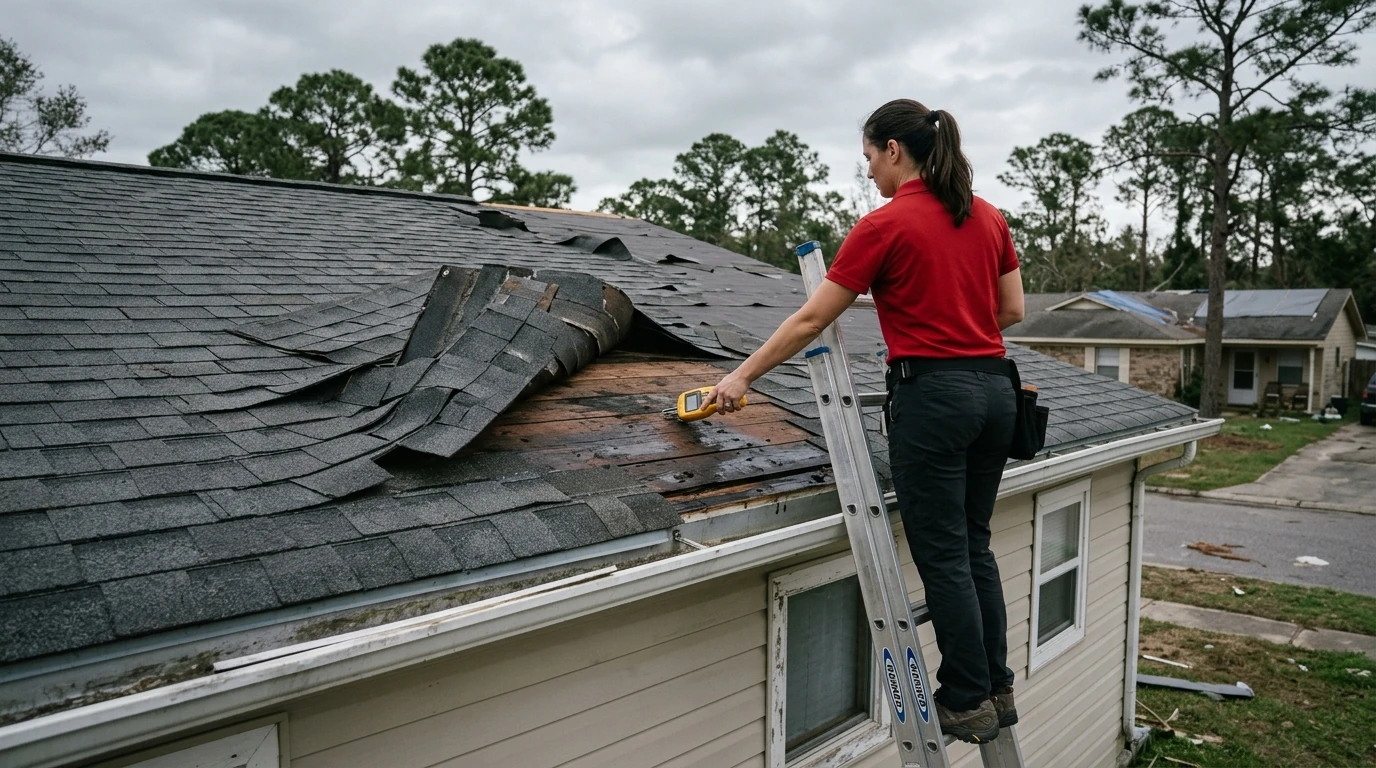
TL;DR: In Gulfport, MS, minor shingle or flashing repairs after wind damage typically run $350 to $1,500. A partial slope replacement runs $1,500 to $4,500, and a full asphalt shingle roof replacement typically costs $9,000 to $18,000 depending on size and pitch. Metal roofs and FORTIFIED-compliant upgrades cost more upfront but can lower wind insurance premiums. Most homeowners policies cover sudden wind and hail damage to a roof, though deductibles on the Mississippi Gulf Coast are often a percentage of the home’s value rather than a flat dollar amount.
If a tropical storm just peeled shingles off your roof near Beach Boulevard or you found granules piling up in the gutters after a hard wind event, you’re probably trying to figure out two things fast: what this is going to cost, and whether insurance will cover it. The answer depends on how much of the roof is damaged, what it’s made of, and whether the deck underneath survived. Here’s what actually drives the number in Gulfport.
How Much Does Roof Repair Cost in Gulfport, MS?
Most roof repairs in Gulfport cost between $350 and $4,500, while a full replacement typically runs $9,000 to $18,000 for asphalt shingles or more for metal. The exact number depends on the scope of damage, not just the square footage.
| Scenario | Typical Cost Range |
|---|---|
| Emergency tarp-over (storm damage, temporary) | $400 - $1,200 |
| Minor shingle patch (small wind-lifted area) | $350 - $900 |
| Flashing, vent boot, or ridge cap repair | $500 - $1,500 |
| Partial replacement, one roof slope | $1,500 - $4,500 |
| Full asphalt shingle roof replacement | $9,000 - $18,000 |
| Standing-seam metal roof replacement | $15,000 - $30,000+ |
These are typical industry ranges for the Mississippi Gulf Coast market, not a quote. A roof with hidden decking rot under the shingles, or one that needs to meet current wind-uplift code, will land toward the higher end of its range. Every roof is different, and a written scope after a physical inspection is the only way to get a real number for your house.
What Drives the Price Up or Down?
Four things move a roof repair estimate more than anything else: the pitch, the material, the condition of the decking underneath, and whether you’re upgrading to FORTIFIED standards.
Roof pitch. A steep pitch takes longer to work safely, needs more fall-protection setup, and usually costs more per square than a low-slope roof of the same size.
Material. Asphalt shingle is the most common and least expensive to repair or replace along the Coast. Metal roofing costs more upfront but holds up better in sustained coastal wind and salt air, and many metal systems carry longer wind warranties.
Decking condition. If plywood decking is soft, delaminated, or rotted from a slow leak that predates the storm, it has to come out and get replaced before new shingles go down. This is the single biggest reason a “simple repair” estimate grows once the old roofing comes off, and it’s a requirement under the International Code Council building codes that most Mississippi jurisdictions adopt.
FORTIFIED upgrade. Building to the FORTIFIED Roof standard, developed by the Insurance Institute for Business and Home Safety, means sealed decking, ring-shank nails, and wind-rated edge metal. It typically adds cost to a replacement but can qualify a Mississippi homeowner for a wind insurance premium discount, which is worth asking your agent about before you pick materials.
Does Homeowners Insurance Cover Storm Roof Damage in Mississippi?
Most standard Mississippi homeowners policies cover sudden wind and hail damage to a roof, but they do not cover damage from gradual wear, poor maintenance, or flood water. Those are two very different claims with two very different outcomes.
Wind damage from a named storm or a straight-line wind event is typically a covered peril. What trips people up is the deductible: Gulf Coast policies commonly carry a separate windstorm or hurricane deductible calculated as a percentage of the home’s insured value (often 2% to 5%) rather than the flat dollar deductible used for other claims. That can mean a few thousand dollars out of pocket before coverage kicks in, so get the actual number from your declarations page, not an assumption.
What’s usually NOT covered: a roof that was already failing from age, missing shingles nobody replaced for years, or water that entered through standing floodwater rather than wind-driven rain. If your roof damage is paired with rising water or storm surge, that portion of the loss generally falls under a separate flood policy, not your homeowners policy. The Mississippi Insurance Department publishes consumer guidance on what to do if you believe a claim was wrongly denied.
Documentation matters either way. Photos of the damage before any tarp or repair work, a copy of the adjuster’s scope, and an independent contractor estimate all protect you if the insurer’s number comes in low. Our related post on storm damage restoration in Gulfport covers the claim-documentation steps in more detail.
What Happens During a Roof Repair or Replacement?
A roof repair after storm damage generally moves through five phases, from stopping active leaks to final inspection.
- Damage assessment and documentation. A contractor walks the roof (or inspects from a ladder and drone photos when the deck isn’t safe to walk) and photographs every damaged area for the insurance file.
- Emergency tarp or board-up. If shingles are missing or decking is exposed, a tarp goes on the same day to stop water intrusion while the claim and materials are sorted out. See emergency board-up and tarping for what that covers.
- Insurance scope review. The contractor’s estimate is compared against the adjuster’s scope line by line, so nothing gets missed, especially decking replacement or code-required upgrades.
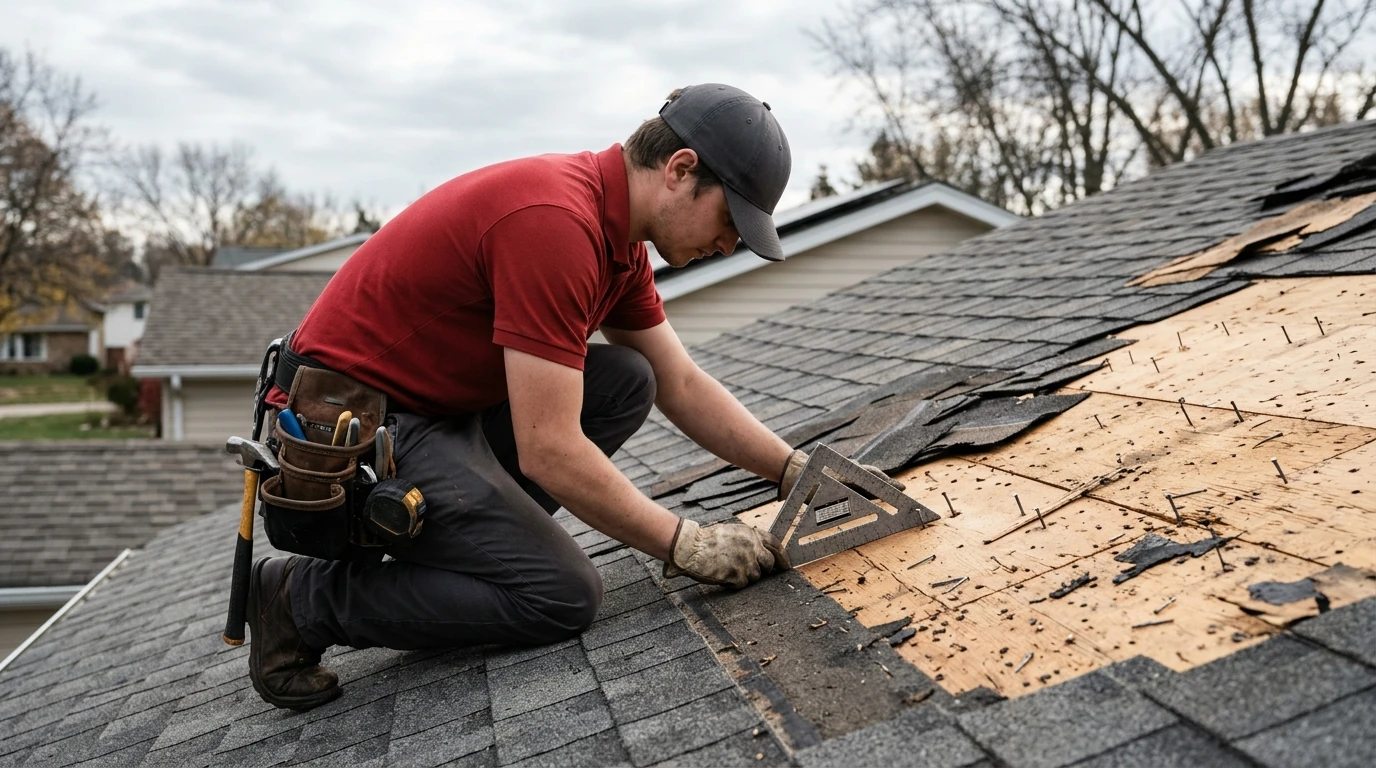
- Tear-off and repair or replacement. Damaged shingles, flashing, or decking come off and get replaced to current code. A FORTIFIED upgrade, if chosen, happens at this stage.
- Final inspection and cleanup. The finished roof is inspected for proper nailing pattern, flashing seal, and ventilation before the job closes out.
Who Should You Call First After Storm Roof Damage in Gulfport?
Call a licensed roofing and restoration contractor before you call a roofer who only does new-construction work, because storm damage usually involves both the repair and the insurance paperwork. HomeLyft Restoration Gulfport holds Mississippi roofing license RO 2728 and is certified to the FORTIFIED Roof wind-mitigation standard, which matters if you’re weighing whether to rebuild to that spec after a covered loss.
If the damage is active (water actively entering the attic, shingles flapping in continued wind), get a tarp on it first and worry about the estimate after the leak is stopped. Our roofing page and the general roofing guide for the Coast walk through what to expect from inspection to final sign-off.
A roof repair estimate is only useful once someone has actually been on the roof and under it. Request a roof damage assessment before you sign anything with an insurance adjuster, so you know whether the scope they wrote matches what the roof actually needs.
About HomeLyft Restoration Gulfport
HomeLyft Restoration Gulfport is an IICRC Certified Firm and FORTIFIED-certified roofing contractor serving Gulfport, MS and the surrounding Gulf Coast since 2022, holding Mississippi contractor license RO 2728. Their crews handle roofing, storm damage restoration, emergency board-up and tarping, and reconstruction across the region, working directly with insurance adjusters to document wind and storm claims from first inspection to final repair.
Need help now? Call HomeLyft Restoration Gulfport at +12282845200.