
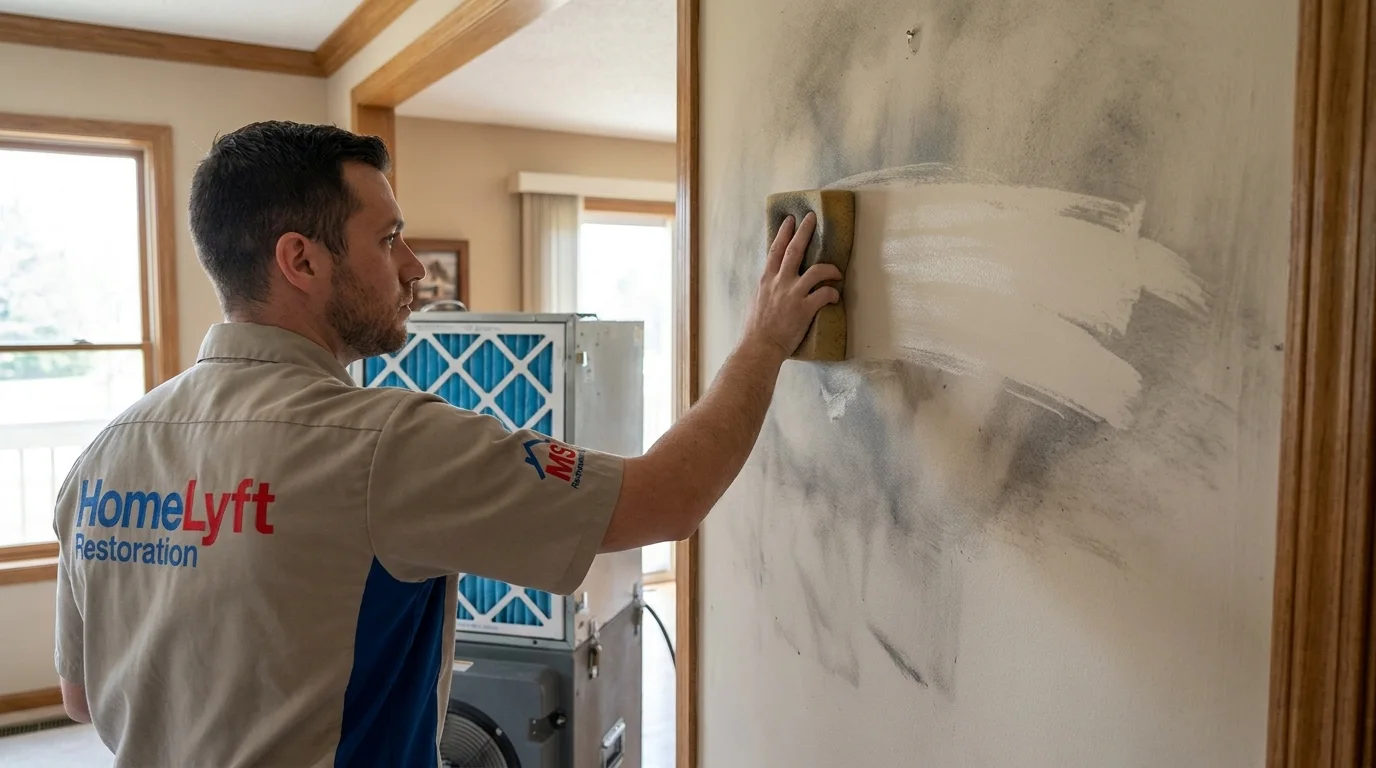
24/7 Emergency Smoke Damage Restoration in Gulfport
24/7 emergency smoke damage restoration in Gulfport and surrounding areas. IICRC-certified, insurance billing accepted. Call +12282845200.
Smoke damage emergency in your home or business? We answer 24/7, call +12282845200 now to start smoke and soot removal before residue sets into your walls, cabinetry, and HVAC system.
Smoke behaves differently than fire. Long after flames are out, soot particles keep working their way into drywall pores, grout lines, and ductwork, turning a one-room incident into a whole-house odor problem within days. A kitchen grease fire, an electrical short in the attic, or smoke drifting in from a nearby wildfire can all leave behind acidic residue that etches metal, yellows grout, and off-gasses for weeks if it’s only painted over instead of actually removed.
What smoke damage restoration actually involves
Smoke damage restoration is residue identification and removal, not just a deep clean. Different fuel sources leave chemically different soot: protein residue from a stovetop fire is nearly invisible but carries an intense odor, while synthetic soot from burning plastics, foam, or electronics is thick, oily, and smears if wiped with the wrong agent. Our techs, trained to IICRC FSRT standards, test the residue type before choosing a cleaning method, because the wrong solvent on the wrong soot can set the stain permanently.
The work covers hard surfaces, HVAC components, and often textiles and contents. Walls, ceilings, and trim get cleaned with dry sponges, degreasers, or encapsulating sealers depending on porosity. Ductwork gets inspected and cleaned when soot has been pulled through the return air system, which is common in homes where the fire source was near an air handler or when a fire burned for more than a few minutes before suppression.
Our process
- Residue and source characterization. We identify whether the soot is wet (protein, low heat, sticky), dry (fast-burning, powdery), or synthetic (plastics, oily film), because this determines every cleaning decision after it.
- Pre-cleaning and HEPA vacuuming. Loose soot is removed from surfaces and fabrics with HEPA-filtered equipment before any wet cleaning begins, to avoid grinding particles deeper into the material.
- Surface and content cleaning. Washable surfaces are degreased or dry-cleaned by residue type; non-salvageable porous materials (some insulation, certain drywall sections) are documented and removed.
- Odor neutralization. Thermal fogging, ozone, or hydroxyl treatment is used to break down odor molecules trapped in porous materials, not just mask them with fragrance.
- Sealing and clearance. Affected framing or subfloor is sealed where needed before finish work begins, and we walk the property with you to confirm the space reads and smells clean.
What separates a good smoke damage response from a bad one
The most common mistake is treating smoke damage as a painting problem. Repainting over unsealed soot traps the odor instead of removing it, and the smell returns within weeks, especially in humid Gulf Coast conditions that reactivate residue. A second common gap is skipping the HVAC system entirely: if soot was pulled through the return air, every time the system runs it can recirculate odor into rooms that were never near the fire.
Adjusters generally want to see documentation of residue type, the cleaning method used for each surface, and photos before and after thermal fogging or ozone treatment. A response that only addresses visible staining, without testing for protein residue hiding in cabinet interiors or wall cavities, tends to get flagged later when odor complaints resurface after the claim is closed.
What does smoke damage restoration cost?
Cost depends on how far the smoke traveled, what burned, and whether HVAC or structural cavities were affected. These are typical industry ranges, not a quote: every loss is different, and HomeLyft Restoration MS provides a written scope of work before any cleaning begins.
| Scenario | Typical range |
|---|---|
| Light smoke odor, single room | $500 - $1,500 |
| Moderate smoke and soot, whole room | $1,500 - $4,000 |
| HVAC duct cleaning for smoke contamination | $450 - $1,200 |
| Contents cleaning and odor treatment, per room | $300 - $900 |
| Whole-house smoke damage after a structure fire | $4,000 - $15,000 |
Most homeowners insurance policies cover smoke damage restoration when it follows a covered fire loss, including odor removal and HVAC cleaning tied to that event; coverage for smoke drifting in from an outside source like a wildfire depends on the specific policy.
Seasonal & regional considerations
Gulfport’s humidity accelerates the chemical bonding of soot to surfaces, so residue that might sit relatively inert in a dry climate can etch into grout and metal fixtures faster here if cleanup is delayed. Agricultural and prescribed burns across the region, along with occasional wildfire smoke drifting in from further inland, can also leave a fine soot film on exterior surfaces and HVAC intakes even when there was no fire on the property itself. Hurricane season brings its own spike in smoke-related calls, tied to candle use and portable generators during power outages.
Service area
We handle smoke damage restoration for homeowners and property managers in Gulfport and the surrounding Mississippi Gulf Coast, including Biloxi, Ocean Springs, D’Iberville, Gautier, and Pascagoula.
If smoke odor or soot staining is spreading beyond the room where the fire happened, don’t wait for it to set. Call +12282845200 to begin smoke and soot removal and get a written scope before residue works any deeper into your home.
Services We Handle
- Smoke Damage Cleanup
- Soot Removal
Frequently Asked Questions
Does homeowners insurance cover smoke damage restoration?
What's the difference between protein soot and synthetic soot, and why does cleanup vary?
How long does smoke odor remediation typically take?
Can smoke damage be cleaned without repainting everything?
Does wildfire smoke cleanup require different treatment than smoke from a structure fire inside the home?
Looking for the best smoke-damage-restoration company in Gulfport?
HomeLyft Restoration MS provides licensed and insured smoke-damage-restoration in Gulfport, MS and the surrounding area, and has served local property owners since 2022. Customers rate us 5.0 out of 5 stars across 61 Google reviews. We answer calls 24/7 — call +12282845200 for immediate help.
Need smoke-damage-restoration now?
We respond 24/7 across Gulfport and surrounding MS cities.
Related Coverage
- Our Restoration Services
- Contact HomeLyft Restoration MS
- Restoration Services in Agricola
- Restoration Services in Bay St. Louis
- Restoration Services in Benndale
- Restoration Services in Big Point
- Restoration Services in Biloxi
- Restoration Services in D'Iberville
- Restoration Services in DeLisle
- Restoration Services in Diamondhead
- Restoration Services in Eastabuchie
- Restoration Services in Ellisville
- Restoration Services in Escatawpa
- Restoration Services in Gautier
- The Fire Damage Restoration Process, Explained