
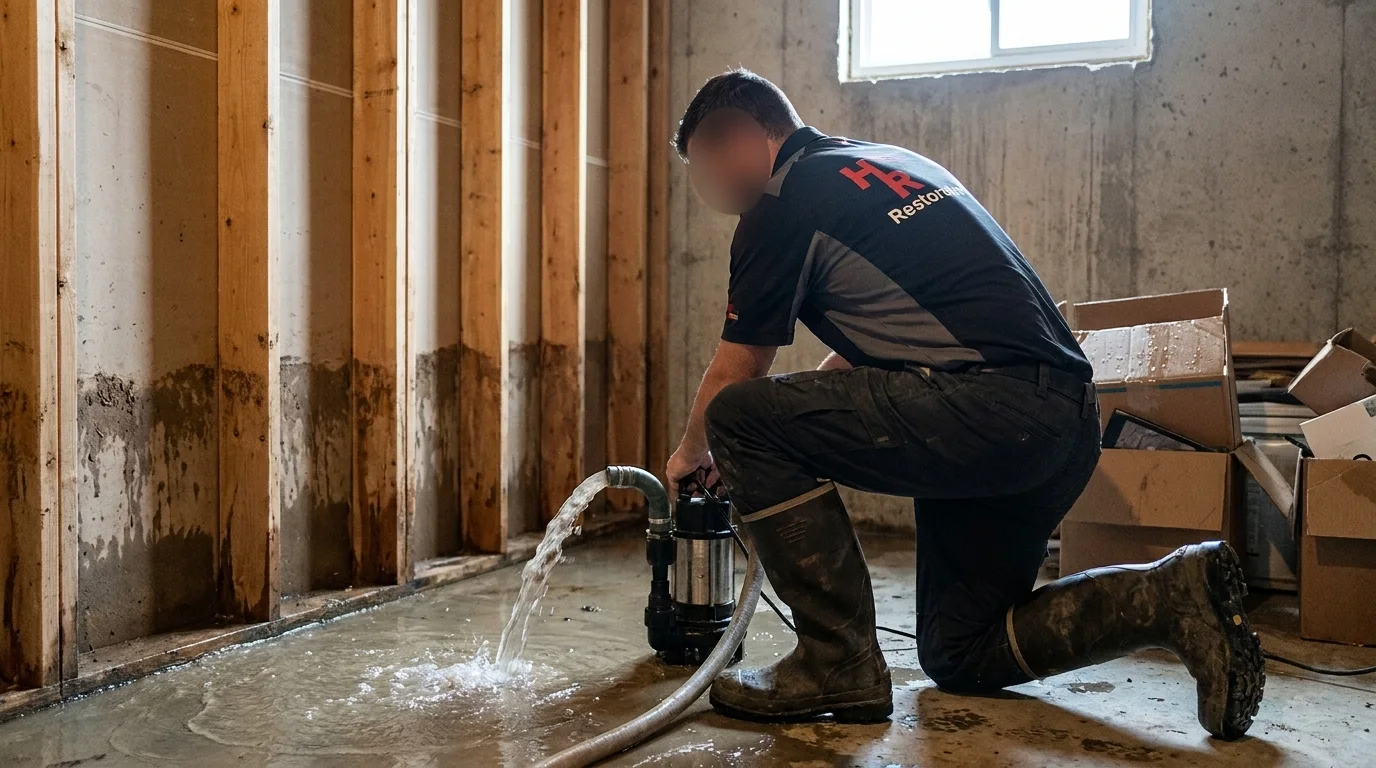
24/7 Emergency Basement Flooding Cleanup in Gulfport
24/7 emergency basement flooding cleanup in Gulfport and surrounding areas. IICRC-certified, insurance billing accepted. Call +12282845200.
Water in your basement after a storm or a failed sump pump? Call HomeLyft Restoration MS now, we answer 24/7. Standing water in a basement rarely stays contained to the floor. Within hours it wicks up drywall, soaks into stored boxes, and starts moving behind baseboards toward framing you can’t see. In Gulfport, where many homes sit on slab or low-pour foundations with a shallow water table, basement and crawlspace flooding also tends to come back if the source (groundwater, a cracked foundation, or a backed-up drain) isn’t addressed alongside the cleanup itself.
What basement flooding cleanup actually involves
Basement water removal is different from drying out a bedroom or kitchen. Basements are enclosed, often below grade, and built with masonry or block walls that hold moisture longer than drywall and framing upstairs. The work typically means pumping or extracting standing water first, then pulling anything porous that’s been sitting in it (carpet pad, cardboard, particle-board furniture) because those materials rarely dry clean. After extraction, the space needs commercial dehumidification and air movement aimed specifically at concrete, block, and any wall cavities that took on water, since masonry releases moisture slowly for days after the surface looks dry. If the water came from outside (storm runoff, a high water table, or a sewer backup) rather than a clean supply line, the cleanup also has to account for contamination level, which changes what can be saved and what has to be discarded.
Our process
- Source and contamination check. Before anything gets pumped out, we identify whether the water is coming from groundwater intrusion, a failed sump pump, a plumbing line, or surface/storm water, and classify it under IICRC category guidelines, since Category 2 or 3 water changes the scope.
- Extraction. Submersible pumps and truck-mounted extraction remove standing water, starting with the lowest point in the basement and working outward.
- Removal of unsalvageable materials. Saturated carpet, baseboards, drywall above the flood line, and insulation inside block-wall cavities come out so drying equipment can actually reach the structure underneath.
- Structural drying and moisture tracking. Dehumidifiers and air movers are set based on the square footage and the moisture readings we take in the slab, block walls, and any framing, not a one-size-fits-all placement. We log readings daily until materials hit a dry standard, not just until the room looks dry.
- Final inspection and odor check. Before equipment comes out, we verify moisture content in wall cavities and flooring, since a basement that looks dry at the surface can still be wet inside a block core.
What separates a good basement flooding response from a bad one
The most common mistake in basement cleanup is drying the surface and calling it done while moisture is still trapped behind paneling or inside concrete block. Block walls have hollow cores that hold water long after the visible surface reads dry, and if drying equipment is pulled too early, mold can establish inside those cavities within 24 to 48 hours without anyone seeing it until there’s a musty smell weeks later. Another common shortcut is skipping category classification on the water itself, if it came in through a floor drain backup or storm surge, treating it like clean water and skipping antimicrobial treatment can leave contamination behind drywall. Insurance adjusters reviewing a basement claim typically look for documented moisture readings at the start and end of drying, photos of the water line and affected materials before demolition, and a clear explanation of why certain materials were removed rather than dried in place. A written scope and daily drying logs are what support that part of the claim.
What does basement flooding cleanup cost?
Costs vary with how much standing water there was, how long it sat before cleanup started, and whether the water was clean or contaminated. A small, recently-flooded basement with clean water costs far less to dry than a finished basement with saturated drywall, flooring, and insulation that’s been sitting for a day or more. Every loss gets a written scope of work from HomeLyft Restoration MS before any work begins, so you know what’s included before anything is removed. Homeowners insurance often covers sudden, accidental water damage (a burst pipe or sump pump failure, for example) but typically excludes gradual seepage or groundwater flooding unless you carry separate flood coverage, so it’s worth checking your policy language early.
| Scenario | Typical range |
|---|---|
| Small basement, clean water, caught quickly | $1,000 - $2,500 |
| Finished basement, saturated carpet and drywall | $3,000 - $7,500 |
| Unfinished basement with block wall saturation | $2,500 - $6,000 |
| Category 2/3 water (sewer backup, storm water) | $4,000 - $10,000+ |
| Basement flooding with mold growth already present | $5,000 - $12,000+ |
Seasonal & regional considerations
Gulfport’s rainy season and tropical storm activity from late spring through fall put basements and below-grade spaces at the highest risk, especially in neighborhoods with a shallow water table or clay-heavy soil that drains slowly. Homes near bayous or low-lying streets tend to see repeat basement and crawlspace flooding during heavy rain events even without a named storm, which is why addressing the water source, not just the cleanup, matters here more than in drier climates.
Service area
HomeLyft Restoration MS handles basement flooding cleanup in Gulfport and across the surrounding Mississippi Gulf Coast, including Biloxi, Long Beach, Pass Christian, Ocean Springs, and D’Iberville.
If water is sitting in your basement right now, don’t wait for it to find its way into framing and wall cavities. Call HomeLyft Restoration MS at +12282845200 to schedule basement water removal and get structural drying started before mold has a chance to take hold.
Services We Handle
- Sump Pump Failure Cleanup
Frequently Asked Questions
Does homeowners insurance cover basement flooding cleanup?
How long does it take to dry out a flooded basement?
Can I just use fans and a dehumidifier from the hardware store?
How do you know if basement floodwater is contaminated?
What should I remove from a flooded basement before help arrives?
Looking for the best basement-flooding-cleanup company in Gulfport?
HomeLyft Restoration MS provides licensed and insured basement-flooding-cleanup in Gulfport, MS and the surrounding area, and has served local property owners since 2022. Customers rate us 5.0 out of 5 stars across 61 Google reviews. We answer calls 24/7 — call +12282845200 for immediate help.
Need basement-flooding-cleanup now?
We respond 24/7 across Gulfport and surrounding MS cities.
Related Coverage
- Our Restoration Services
- Contact HomeLyft Restoration MS
- Restoration Services in Agricola
- Restoration Services in Bay St. Louis
- Restoration Services in Benndale
- Restoration Services in Big Point
- Restoration Services in Biloxi
- Restoration Services in D'Iberville
- Restoration Services in DeLisle
- Restoration Services in Diamondhead
- Restoration Services in Eastabuchie
- Restoration Services in Ellisville
- Restoration Services in Escatawpa
- Restoration Services in Gautier