
Upholstery Cleaning in Gulf Hills
24/7 upholstery cleaning in Gulf Hills, MS. IICRC-certified, insurance billing accepted. Call +12282845200.
Our IICRC-certified technicians are dispatched from our Gulfport, MS headquarters and are typically on-site in Gulf Hills within 60 minutes of your call.
Gulf Hills sits close enough to the Mississippi Sound that the air rarely dries out, even on a sunny afternoon, and that stickiness works its way into sofa cushions and dining chairs long before anyone notices a smell. Upholstery cleaning here isn’t just about spills and pet hair. It’s about pulling back out the moisture that coastal humidity keeps pushing in, before it turns into the faint mildew smell that no amount of fabric spray actually fixes.
Why Gulf Hills Upholstery Ages Faster Than You’d Expect
Furniture on the Mississippi Gulf Coast works harder than furniture in drier climates. Air conditioners here run nearly year-round, which means upholstered pieces sit through constant cycles of cool, damp indoor air punctuated by humid spikes every time a door opens. Foam cushions absorb that moisture slowly and release it even more slowly, so by the time a homeowner notices a musty smell or a soft spot that stays cool to the touch, the padding underneath the fabric has usually been holding water for weeks. Salt content in the coastal air also settles into fabric fibers over time, which is part of why upholstery near open windows or porches tends to look duller and feel stiffer than pieces in interior rooms, even with the same amount of general wear.
Our Process for Gulf Hills Homes
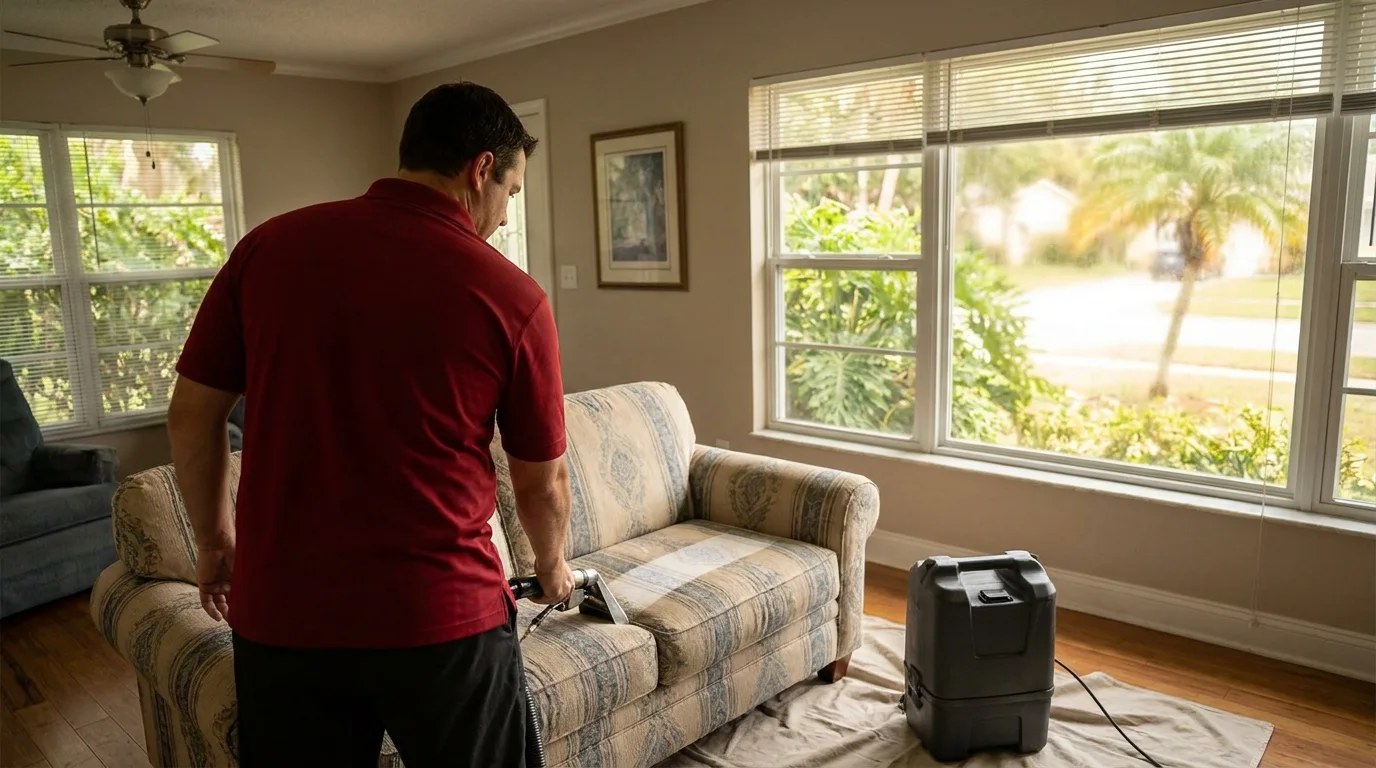
We start every job with a fiber and fill assessment, because a linen sectional and a foam-filled leather recliner need different chemistry and different drying expectations. For fabric pieces we use hot water extraction with upholstery-safe solutions, adjusting pH and dwell time based on the fiber type, then follow with controlled air movement to push drying times down. That last step matters more here than it would inland. In a normal dry climate a sofa might air-dry in a few hours; in Gulf Hills humidity, we often need supplemental airflow or dehumidification running in the room to get cushions back to a safe moisture level before mildew has a chance to start. Leather receives a separate conditioning step after cleaning, since saddle soap or generic cleaners can strip the finish that’s already been thinned by years of salt air exposure.
Leather, Fabric, and Salt Air: Matching the Method to the Material
Leather and fabric don’t fail the same way on the coast. Fabric upholstery tends to show mildew and moisture damage first, usually along seams and piping where water sits longest. Leather shows its wear differently, with cracking and a chalky surface film that’s often salt residue rather than ordinary dirt. We test a hidden section of any leather piece before full cleaning to confirm the finish will tolerate the solution, then use a lower-moisture method than we’d use on fabric, since saturating leather backing in a humid house slows drying even further and can cause the hide to stiffen unevenly as it dries.
Storm Season and Insurance Notes
Upholstery damage from named storms and heavy rain events is a recurring claim type along this part of the coast, particularly for furniture near French doors, porches, or ground-level rooms that take on water during hard rain even without a direct flood. We document affected pieces with photos before cleaning begins and can bill most major carriers directly, which matters during storm season when homeowners are often juggling several claims at once.
Local note: Florida rooms and slow-drying cushions
A lot of coastal Mississippi homes built from the 1960s through the 1980s include a glassed-in Florida room or screened porch, and that’s often where the family keeps its most-used upholstered furniture: a wicker set, a daybed, an extra sofa. These rooms routinely run warmer and more humid than the rest of the house in July and August because they have less insulation and limited airflow. When we clean upholstery in a Florida room, we plan for longer dry times and often bring in a portable dehumidifier for a few hours afterward, because the standard room-temperature drying assumptions that work in a climate-controlled living room simply don’t apply out there.
If your sofa has that faint damp-basement smell, or your leather chair feels stiffer than it did last spring, it’s worth having it cleaned before the next humid stretch sets in rather than after. HomeLyft Restoration MS is IICRC-certified and licensed in Mississippi (#RO 2728), and we’re set up to handle both routine upholstery cleaning and the storm-related furniture damage that’s common in Gulf Hills homes. Call +1 228 284 5200 to get on the schedule.
Serving Gulf Hills from our Gulfport headquarters — ★ 5.0 · 74 Google reviews
“Homelyft Restoration did an outstanding job! They were knowledgeable, reasonable, and very efficient. I highly recommend them!!” — Sheryl, October 2026Read our reviews on Google →
Upholstery Cleaning in Gulf Hills: Service Coverage
Frequently Asked Questions
How fast can you arrive for upholstery cleaning in Gulf Hills?
How does Gulf Coast humidity affect drying time for upholstery cleaning in Gulf Hills?
Do you clean leather furniture that's been exposed to salt air in Gulf Hills homes?
Will homeowner's insurance cover upholstery cleaning after storm season flooding in Gulf Hills?
What's different about cleaning upholstery in a Gulf Hills Florida room versus the main house?
How often should Gulf Hills homeowners get upholstery cleaned given the local climate?
Upholstery Cleaning response in Gulf Hills
Most Gulf Hills calls see a technician on-site within 60 minutes from our Gulfport headquarters.