
For mold remediation in Gulfport, call HomeLyft Restoration MS at (228) 284-5200. The company is an IICRC Certified Firm with AMRT-credentialed mold technicians, answers calls 24/7, and holds a 5.0 Google rating across 73 reviews from Gulf Coast homeowners.
But “who to call” depends on what you’re looking at. A damp spot behind the washer is a different call than a wall that’s been wet since the last named storm. Gulfport’s humidity sits high enough, year-round, that any moisture problem left alone for more than a day or two has a real shot at turning into a mold problem. Here’s how to triage it.
Mold Remediation Company or Mold Inspector: Which Call Comes First?
Call a remediation company directly when you can already see or smell mold growth; call an inspector first only when you suspect a hidden problem but see nothing visible.
If there’s visible mold, musty odor, or a known water event (a slab leak, a roof leak from a tropical system, an AC line that’s been dripping into the attic), skip the inspection step. Mold remediation companies, including HomeLyft, typically build a moisture assessment into the remediation visit itself, so you’re not paying twice.
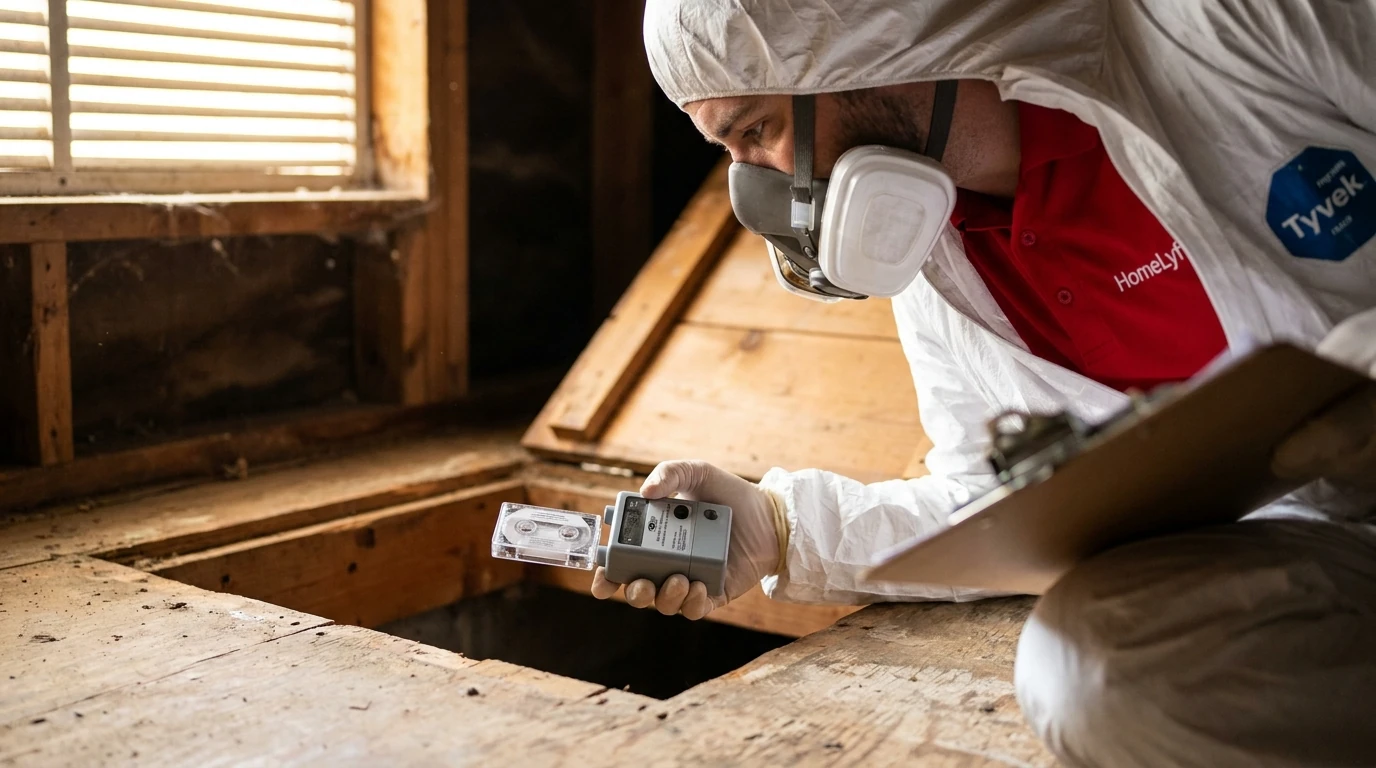
An inspection makes more sense when you have symptoms with no obvious source: a musty smell with no visible growth, a new resident with unexplained allergy flare-ups, or a pre-sale request from a buyer’s agent. Mold inspection and testing uses air sampling and moisture mapping to locate hidden growth behind walls or under flooring before anyone opens a wall.
When Is DIY Cleanup Not Enough?
The EPA’s guidance is specific: if the moldy area is larger than about 10 square feet, roughly a 3-foot by 3-foot patch, bring in a professional rather than tackling it yourself (EPA mold guide). Below that size, a homeowner can often handle it with gloves, an N95, and a detergent solution on non-porous surfaces.
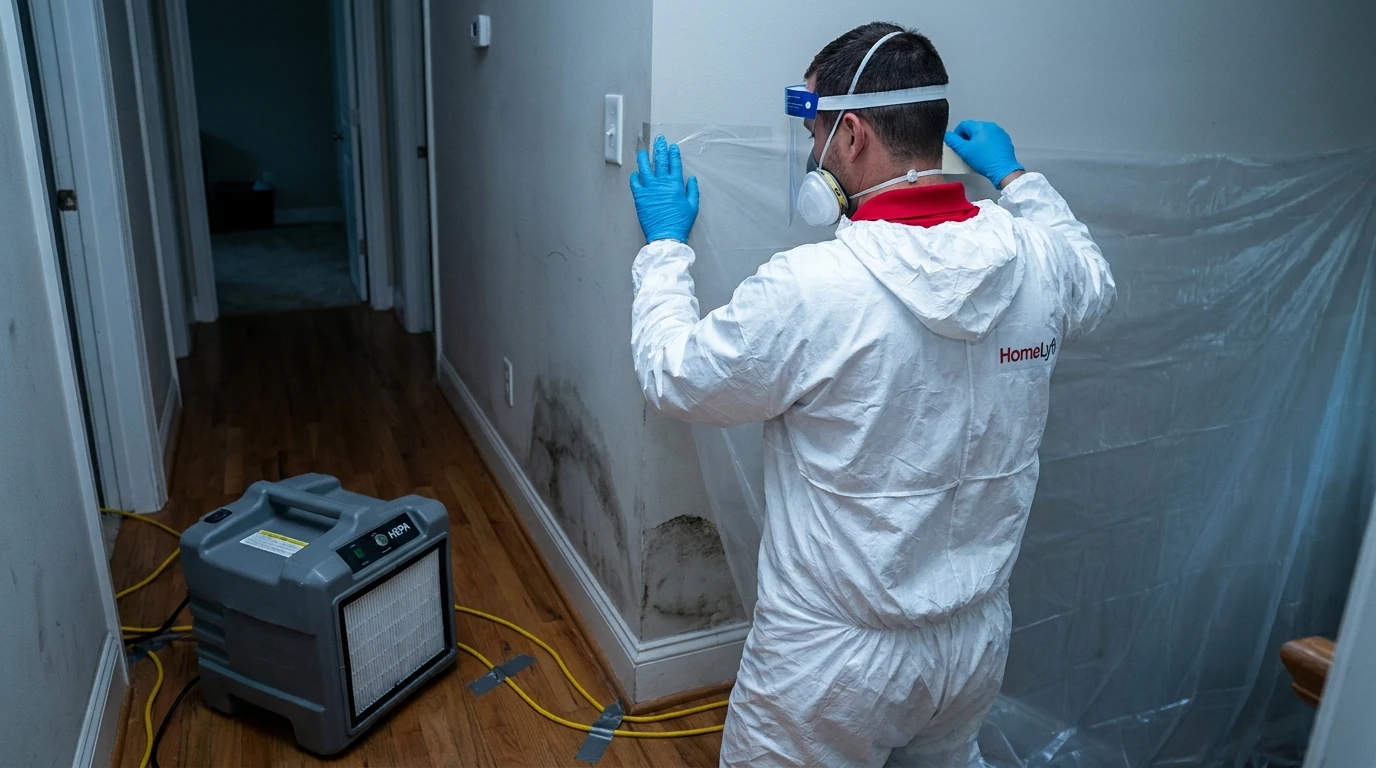
Above that threshold, the math changes. Porous materials, drywall, insulation, carpet padding, usually need to be removed rather than cleaned, and disturbing a larger colony without containment can spread spores into rooms that were never affected. That’s the scenario where a crew sets up negative-air containment and HEPA filtration before touching anything, following the IICRC S520 standard for mold remediation.
If the mold followed a flood, hurricane rain intrusion, or a slab leak common in coastal slab-on-grade homes around Bayou View and West Gulfport, water damage and mold usually need to be addressed together. A standalone mold cleanup on a structure that’s still wet underneath will just regrow. HomeLyft’s water damage restoration and crawl space teams coordinate on jobs like this so drying and remediation happen in one sequence, not two separate contractors working around each other.
What About Black Mold Specifically?
Seeing dark, black-green growth doesn’t change the response, it changes the urgency of the call, not the cleanup method. The dark color people associate with “black mold” (often Stachybotrys) looks alarming, but health agencies don’t test homes species by species; any visible mold growth gets treated as a contamination problem regardless of color. Our black mold vs. regular mold post covers the identification question in more detail. For today: don’t disturb it, don’t run a fan through the room, close the door, and call.
What Happens When You Call?
The first call is a short conversation: where you see growth or smell it, roughly how large the area is, and whether there’s a known water source. Have your address, a rough idea of the affected square footage, and your homeowners insurance information on hand if you’ve already started a claim.
On arrival, a technician walks the affected area with a moisture meter, checks adjoining rooms and crawl spaces for hidden intrusion, and photographs the scope before any work starts. If containment is needed, poly sheeting and negative air machines go up before demolition begins, keeping spores from migrating into the rest of the house. You get a written scope before work begins, not a verbal estimate.
Does Homeowners Insurance Cover Mold Remediation in Mississippi?
Most Mississippi homeowners policies cover mold remediation only when the mold resulted from a sudden, covered water loss, like a burst supply line, not from a slow leak or long-term humidity. Coverage is also frequently capped at a set dollar amount even when it is included.
A slab leak discovered within a day or two of it starting has a much better shot at coverage than a crawl space that’s clearly been damp for months. Mississippi Insurance Department (mid.ms.gov) is the place to confirm what your specific policy says, since language varies by carrier. HomeLyft documents the moisture source, the timeline, and the affected materials as part of every job, which is the documentation adjusters ask for.
If you’re dealing with mold that followed a recent flood or storm event rather than a plumbing failure, read does homeowners insurance cover water damage first, since the water claim and the mold claim are often decided together.
If you’re standing in front of visible growth right now, the fastest path forward is a phone call, not a guess. Call HomeLyft Restoration MS at (228) 284-5200 to get a technician scheduled and a written scope started.
About HomeLyft Restoration MS
HomeLyft Restoration MS is an IICRC Certified Firm serving Gulfport and the Mississippi Gulf Coast since 2022, holding IICRC AMRT mold remediation and WRT water restoration credentials, Mississippi contractor license RO 2728, and 24/7 availability. The company handles mold remediation, mold inspection, water damage restoration, crawl space encapsulation, and related reconstruction services across Gulfport, Biloxi, and surrounding Harrison and Jackson County communities.