
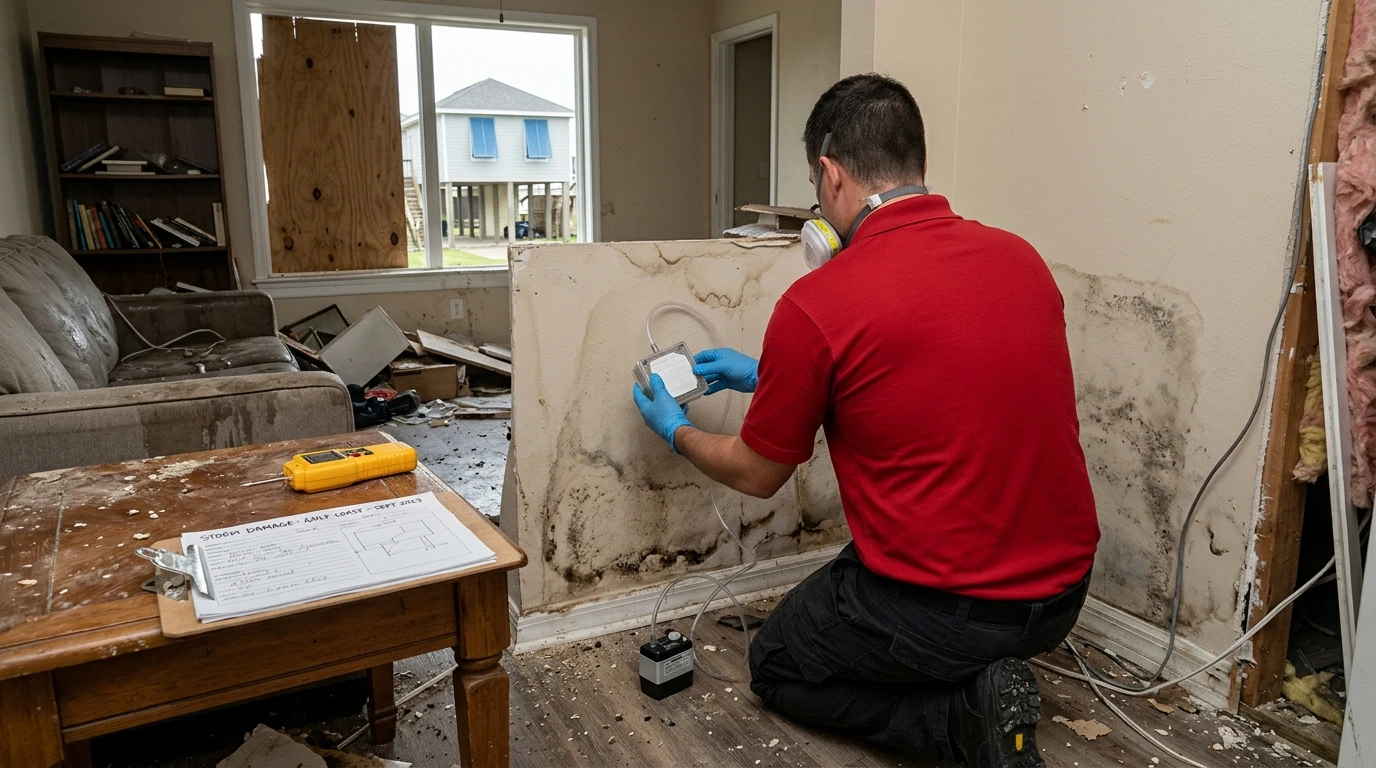
TL;DR: After a hurricane hits Gulfport, mold can start growing on wet drywall and insulation within 24 to 48 hours, so storm damage needs to move straight into drying, not just cleanup. Call a restoration crew as soon as the water or wind-driven rain stops coming in and the home is safe to enter. HomeLyft is an IICRC Certified Firm with both water and mold credentials and answers 24/7 across the Gulf Coast.
If a hurricane just pushed storm surge or wind-driven rain into your Gulfport home and the power’s still flickering on and off, mold is already working against you. For mold damage after a hurricane in Gulfport, call HomeLyft Restoration Gulfport at (228) 284-5200. The company is an IICRC Certified Firm with mold (AMRT), water (WRT), and structural drying (ASD) credentials, and answers around the clock, which matters when a storm knocks out power for days and humidity climbs inside a closed-up house.
How fast does mold start growing after storm flooding?
Mold can start colonizing wet drywall, insulation, and carpet padding within 24 to 48 hours of getting wet, according to the EPA’s guidance on flooded homes. After a hurricane, that clock starts the moment storm surge or wind-driven rain gets inside, whether or not anyone’s there to see it.
On the Mississippi Gulf Coast, the math is worse than inland storms because the air itself holds so much moisture. A house in Gulfport that loses power for three or four days, with no AC running and windows boarded over, can go from “just wet” to visibly growing mold faster than the same damage would in a drier climate. Homes anywhere from Long Beach to Biloxi deal with this same window every hurricane season.
Should you call a restoration company, a plumber, or someone else first?
Call a restoration company once the storm water has stopped moving and the house is safe to enter. Call a plumber first only if an indoor pipe or supply line failed on its own. Call the utility company or 911 immediately for a gas smell, a downed power line, or exposed wiring, before anyone goes near standing water.
A few quick rules for triage:
- Gas smell, sparking outlets, or a downed line: utility company or 911 first, don’t enter.
- An appliance hose or supply line failed, unrelated to the storm: a plumber stops the source.
- Storm surge, wind-driven rain, or a roof or window breach let water in: a restoration company for extraction and drying, plus board-up or tarping if the breach is still open (emergency board-up and tarping).
- Insurance: call your adjuster after mitigation has started, not before, most policies expect you to limit further damage first.
What happens when you call for help?
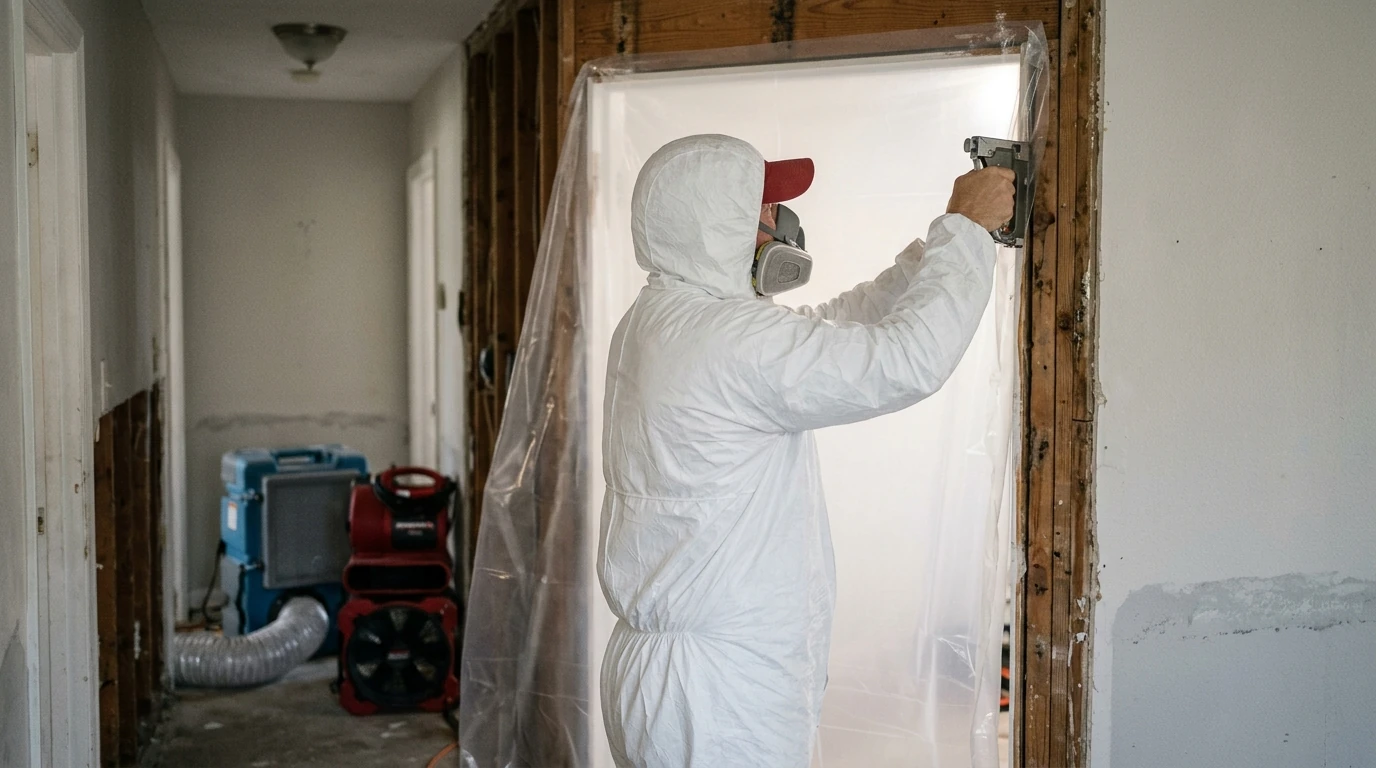
A call to a restoration company starts with a few quick questions: what got wet, how long ago, and whether the power and water are back on. From there a crew comes out to map moisture, begin extraction, and get air moving before mold has a real chance to take hold.
Have your address, your insurance company’s name, and a few photos of the damage ready when you call. On arrival, a crew typically checks moisture levels behind walls and under flooring with a moisture meter, starts extraction if water is still standing, and sets up air movers or an LGR dehumidifier. If mold is already visible, containment plastic goes up before any disturbance, to keep spores from spreading into dry parts of the house (storm damage restoration, water damage restoration).
What has to be removed, and what can be dried in place?
Drywall, insulation, and carpet padding that stayed wet more than 24 to 48 hours usually have to come out. Structural wood, concrete, and some flooring can often be dried in place with air movers and dehumidifiers, following the IICRC S500 water damage standard.
Storm surge and wind-driven rain from a hurricane are generally treated as Category 3, grossly contaminated water, because they can carry soil, runoff, and sometimes sewage. That changes the response: more porous material comes out instead of being dried, and anyone working in it needs gloves and a respirator, not just a mop and a fan. If the home also has standing water from a backed-up line, that’s a separate, related problem worth reading about in our guide on what to do in the first 24 hours after water damage.
How do you document storm and mold damage for insurance?
Photograph every wet or moldy surface before you move or remove anything, note the date the storm hit and the date you first saw water or mold, and keep receipts for any fans, tarps, or temporary repairs you paid for yourself.
Most policies place a duty on the homeowner to mitigate further damage, and documentation is how you prove you did. Wide shots of each room, close-ups of the waterline or visible growth, and a simple written timeline go a long way with an adjuster. Our water damage insurance claim guide covers what to photograph and when to call your carrier in more detail.
Does homeowners insurance cover mold after a hurricane?
Most homeowners policies only cover mold that results from a sudden, covered water loss, like a roof torn open by wind, and even then often cap the payout. Storm surge and flood water are excluded from standard homeowners insurance and need a separate flood policy.
That separate coverage usually comes through the National Flood Insurance Program or a private flood carrier, not your regular homeowners policy. The Insurance Information Institute has a plain-language rundown of which disasters fall under which policy type, which is worth reading before you assume a loss is covered. Our own post on whether homeowners insurance covers water damage walks through the same distinction in more detail.
If you’re staring at wet drywall after the last storm and aren’t sure whether it’s a drying job or already a mold job, a moisture and mold inspection settles that question before you spend money guessing (mold inspection and testing, mold remediation). Call HomeLyft at (228) 284-5200 to get a crew started on drying and documentation before the window closes.
About HomeLyft Restoration Gulfport
HomeLyft is an IICRC Certified Firm (license RO 2728) based in Gulfport, Mississippi, founded in 2022. Its crews hold IICRC certifications in water damage (WRT), structural drying (ASD), mold remediation (AMRT), and fire and smoke (FSRT), and the company handles storm damage restoration, mold remediation, water damage restoration, and board-up and tarping across the Mississippi Gulf Coast, answering calls 24/7.