
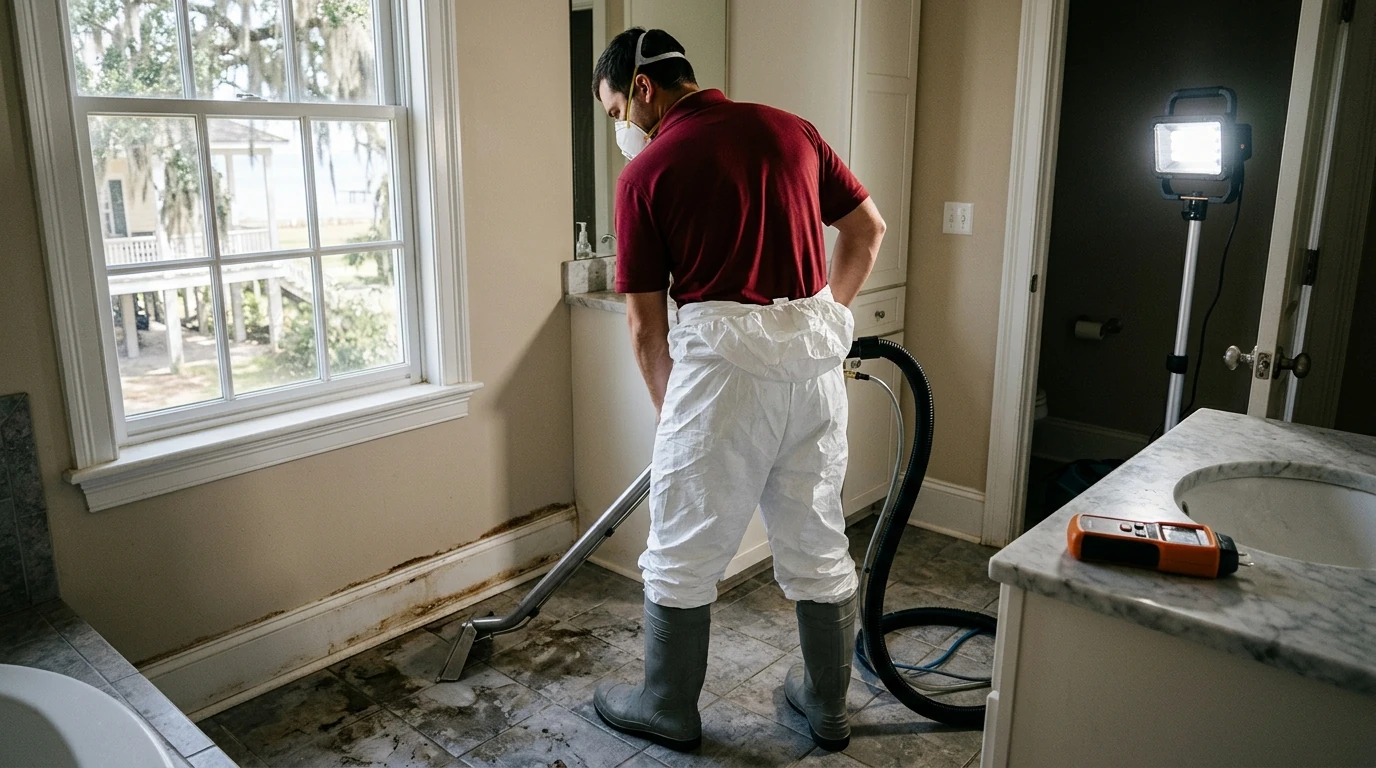
TL;DR: In Gulfport, MS, sewage cleanup typically costs $400 to $1,500 for a contained, single-fixture backup and $3,500 to $15,000 or more when a sewer line failure reaches multiple rooms or a crawl space. Cost depends on how much Category 3 water spread, how many porous materials must be removed, and how fast cleanup starts. A licensed plumber clears the blocked line; a restoration company handles the extraction, sanitizing, and drying that follow.
If your toilet backed up into the hallway last night, or water is pooling under the house near Pass Road and the smell has already reached the living room, you’re trying to figure out whether this is a $500 problem or a $10,000 one before you call anyone. The honest answer is that it depends mostly on how far the water traveled and what it touched, not on which company you hire. Here’s what actually moves the number.
How much does sewage cleanup cost in Gulfport, MS?
Sewage cleanup in the Gulfport area typically runs $400 to $1,500 for a small, contained backup limited to one bathroom, and climbs past $8,000 when a sewer line failure spreads Category 3 water through a crawl space or several rooms. These are general industry ranges, not quotes: every HomeLyft Restoration MS job starts with a written scope after an on-site inspection, because the only way to price this work accurately is to see what the water actually reached.
| Scenario | Typical Cost Range |
|---|---|
| Single toilet or fixture backup, under 100 sq ft, minimal materials affected | $400 - $1,500 |
| Bathroom or laundry room backup with some flooring or baseboard removal | $1,500 - $3,500 |
| Multi-room backup with drywall and subfloor removed | $3,500 - $7,000 |
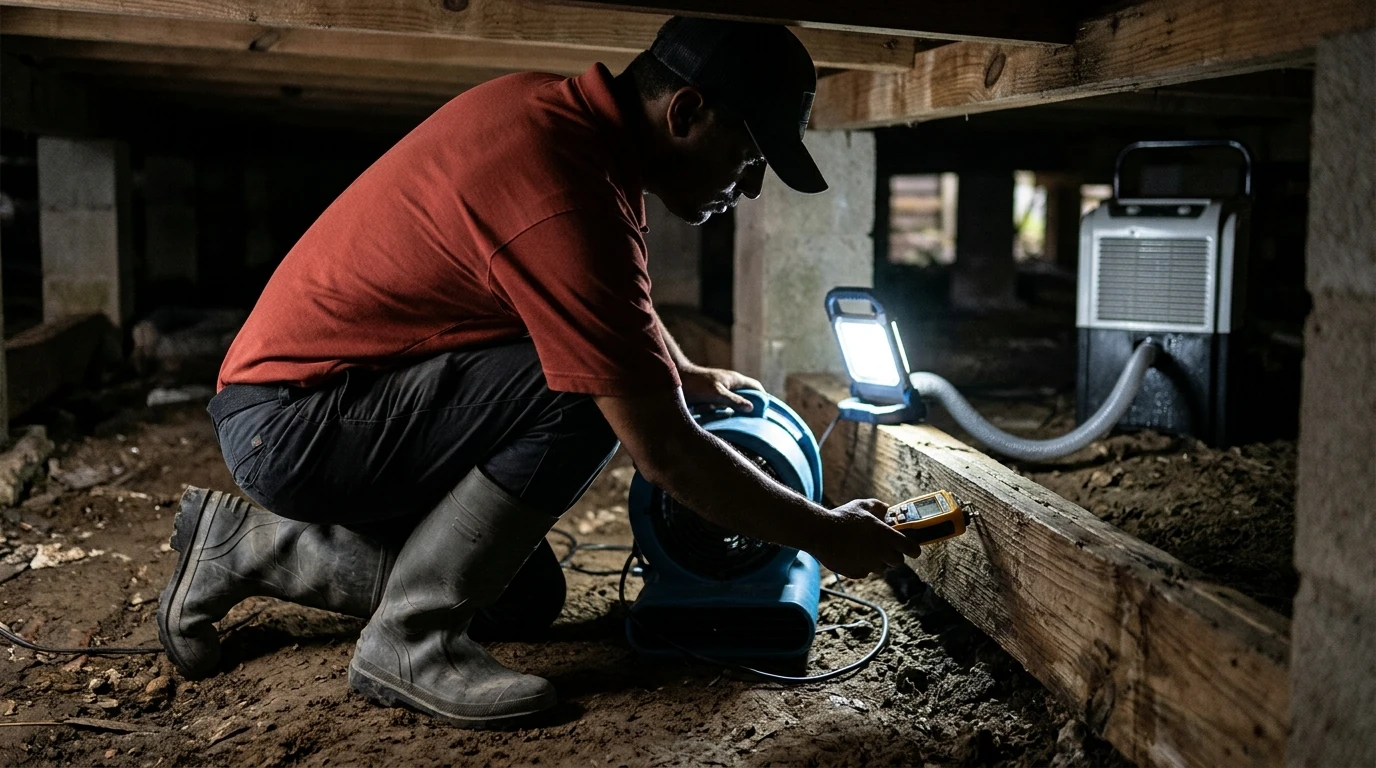
| Sewage backup reaching a crawl space (common in coastal MS pier-and-beam homes) | $3,500 - $8,000 |
| Main sewer line failure, extensive demolition across multiple rooms | $8,000 - $15,000+ |
| Odor remediation and antimicrobial treatment add-on | $300 - $1,200 |
What actually drives the price up or down?
The biggest cost factor is the category of water and how far it traveled before anyone called for help. Any backup from a drain, toilet, or sewer line beyond the trap is Category 3 water, also called black water, under the ANSI/IICRC S500 standard. That classification matters because Category 3 materials (carpet, carpet pad, drywall, insulation, often subfloor) usually get removed and replaced rather than dried in place.
Square footage and the number of rooms affected matter next. A backup confined to one bathroom is a fraction of the cost of one that spreads down a hallway into bedrooms. Coastal Mississippi homes built on piers or crawl spaces, common around Gulfport, Long Beach, and D’Iberville, add a wrinkle: sewage that backs up under the house can sit in the crawl space longer before anyone notices, which usually means more contaminated soil, insulation, and ductwork to address. That’s part of why crawl space moisture control is its own line item on many coastal jobs.
Response time is the factor homeowners control the most. The longer Category 3 water sits, the more materials it saturates and the more odor sets into porous surfaces, which pushes the job from a cleanup into a cleanup-plus-rebuild. Other factors: how many plumbing fixtures were involved, whether HVAC ductwork got contaminated, and whether the odor has migrated into adjacent rooms, which can add a dedicated odor removal phase.
Will homeowners insurance cover sewage cleanup in Mississippi?
Most standard homeowners policies do not automatically cover sewer or drain backup, including sump pump failure. Coverage for this specific loss usually requires a separate water backup (sewer/sump) endorsement added to the policy, which many Mississippi homeowners never add unless an agent flagged it.
If that endorsement is on the policy, the backup itself and the resulting cleanup are typically covered subject to the deductible and endorsement limit. If it isn’t, the homeowner is generally responsible for the cleanup cost out of pocket, even though the same policy would cover a burst supply pipe. This is worth confirming with the Mississippi Insurance Department or directly with the carrier before assuming either way. Our water damage insurance claim tips post covers how documentation and timing affect any water-related claim, sewage included.
Whatever the coverage situation, document everything before cleanup starts: photos, video, a list of affected items, and the time the backup was discovered. That documentation protects a claim whether the endorsement applies or the homeowner is paying directly and wants an accurate record for tax or resale purposes later.
Why isn’t sewage cleanup a DIY job?
Category 3 water carries bacteria, viruses, and parasites that ordinary household cleaners don’t neutralize, which is why the CDC’s disaster cleanup guidance calls for protective equipment and proper disposal, not a mop and a bucket. A homeowner without PPE, a HEPA-filtered extractor, and antimicrobial products is more likely to spread contamination into unaffected rooms than to actually resolve it.
There’s also a scope problem: it’s hard to know how far Category 3 water wicked into a wall cavity or subfloor without moisture meters and, in some cases, borescope inspection. Treating only the visible mess often leaves contaminated material behind the baseboard, which becomes an odor and mold problem weeks later. One more thing worth being clear about: a plumber’s job is to find and clear the blockage causing the backup. A restoration crew’s job is the cleanup, sanitizing, and drying that comes after. Both are usually needed, and neither replaces the other.
What happens during a sewage cleanup visit?
A sewage cleanup visit generally moves through five phases: assessment, extraction, demolition of unsalvageable materials, sanitizing, and drying, documented at each step for insurance purposes.
- Assessment. The technician identifies the water category, maps how far it traveled, and checks moisture levels in walls and flooring with a meter.
- Extraction. Standing water and contaminated material are pumped or vacuumed out using truck-mounted or portable extraction equipment rated for Category 3 water.
- Demolition. Porous materials that can’t be sanitized, often drywall, carpet, pad, and sometimes subfloor, are removed and bagged for disposal per EPA flood cleanup guidance.
- Sanitizing. Remaining structural surfaces are cleaned with antimicrobial and disinfecting agents to address pathogens left behind.
- Drying. Air movers and dehumidifiers run until the space reaches a dry standard, confirmed with follow-up moisture readings, typically over several days.
What does rebuilding after sewage damage involve?
Rebuilding after sewage damage usually means replacing whatever had to be removed during cleanup: drywall, flooring, baseboard, and in heavier cases, subfloor or crawl space insulation. This is where a reconstruction crew picks up once the space is clean and dry, matching materials and finishes so the repair isn’t obvious. Our reconstruction overview walks through how that phase typically unfolds after a water or sewage loss on the Gulf Coast.
For a backup that’s still active or already soaking into flooring, the next step is stopping the spread and getting someone qualified to assess the scope before it gets worse. Request a sewage cleanup assessment and keep people, pets, and food away from the affected area until a technician confirms it’s safe.
About HomeLyft Restoration MS
This guide was prepared with HomeLyft Restoration MS’s restoration team, led by Terry Robinson. HomeLyft Restoration MS is an IICRC Certified Firm (license RO 2728) serving Gulfport and the Mississippi Gulf Coast since 2022, with technicians holding WRT and ASD certifications for water and structural drying work. The company handles sewage cleanup, water damage restoration, odor removal, and reconstruction across the region, and operates on a 24/7 basis.
Need help now? Call HomeLyft Restoration MS at +12282845200.