
TL;DR: Mold remediation in Gulfport, MS typically costs $500 to $3,500 for a single contained area like a bathroom or closet, $1,500 to $6,000 for a crawl space or attic job, and $10,000 or more for whole-house jobs tied to a major water loss. The price depends on square footage, how many building materials have to be removed, and whether containment and air scrubbing are needed. Most homeowners insurance policies do not cover mold caused by gradual moisture, only mold that follows a sudden, covered water loss, and often with a lower sublimit.
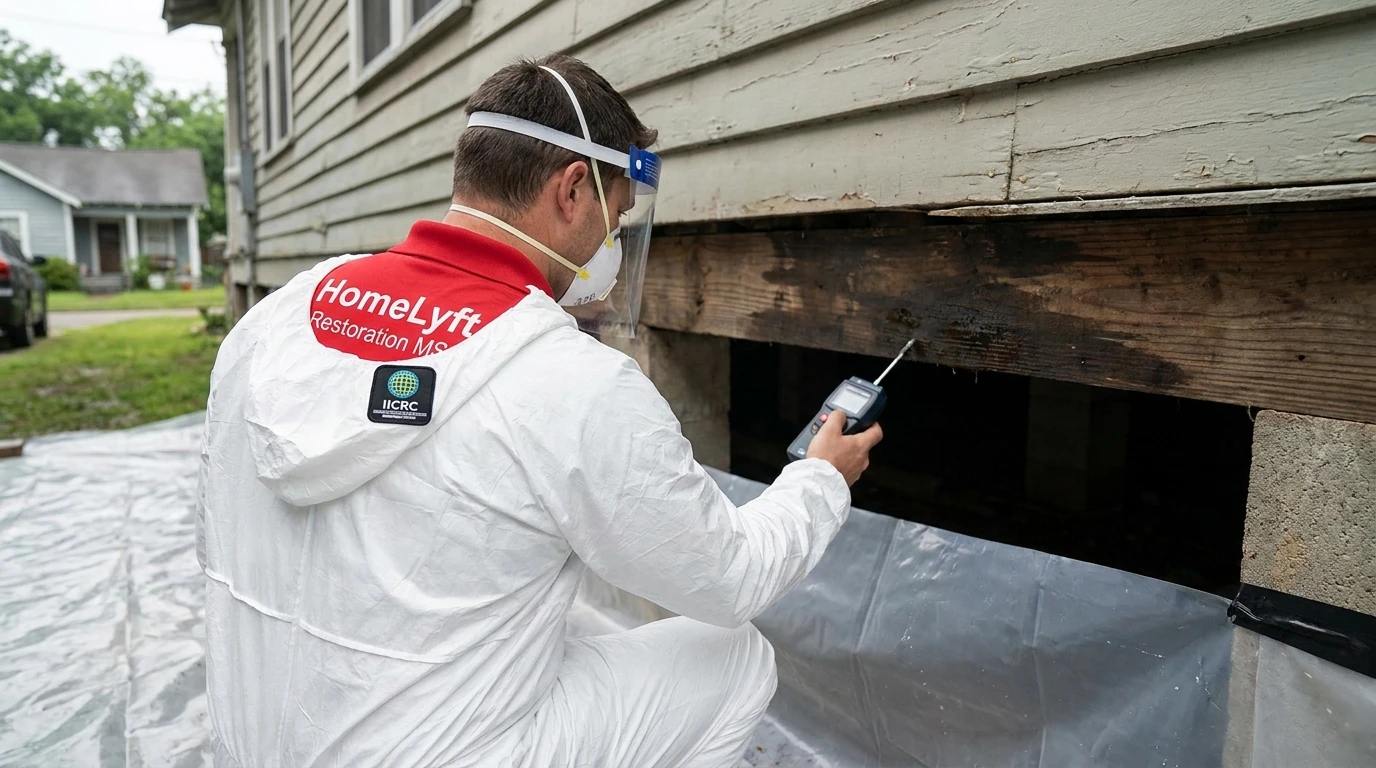
If you just got a mold inspection report back, or you found a musty smell coming from the crawl space under your Orange Grove home and you’re trying to figure out whether this is a $600 fix or a $15,000 one, the honest answer is: it depends on what’s growing and where. Gulf Coast homes sit in a humid climate with a lot of pier-and-beam and raised-foundation construction, which means crawl space mold is one of the most common calls we get in Gulfport. Here’s what actually drives the number.
How Much Does Mold Remediation Cost in Gulfport, MS?
Most mold remediation jobs in the Gulfport area fall between $500 for a small, contained spot and $10,000+ for a whole-house job with structural removal. The table below reflects typical industry ranges for jobs of this type on the Mississippi Gulf Coast; every property is different, and HomeLyft Restoration MS provides a written scope after an inspection rather than a phone quote.
| Scope | Typical Cost Range |
|---|---|
| Small spot (under 10 sq ft, closet or bathroom corner) | $500 - $1,500 |
| Single room, moderate growth (bedroom wall, around a window) | $1,500 - $3,500 |
| Whole room with HVAC or subfloor involvement | $3,500 - $7,500 |
| Crawl space remediation (500-1,500 sq ft) | $1,500 - $6,000 |
| Attic remediation | $1,500 - $5,000 |
| Whole-house, multiple rooms, following a major water loss | $10,000 - $30,000+ |
The low end covers surface mold on nonporous materials like tile or metal. The high end covers jobs where drywall, insulation, and subfloor have to come out and get rebuilt, which is where reconstruction work folds into the mold scope.
What Drives Mold Remediation Pricing?
Four things move the price more than anything else: how much square footage is affected, what materials have to be removed, how hard the space is to access, and whether containment and negative air pressure are required. A 10-square-foot spot behind a toilet costs far less than mold that’s spread through wall cavities on two floors.
Materials matter because porous materials, like drywall, carpet, insulation, and untreated wood, almost always get removed rather than cleaned once mold has colonized them, per the ANSI/IICRC S520 standard for professional mold remediation. Nonporous materials like tile, glass, and some sealed concrete can often be cleaned in place, which keeps costs down.
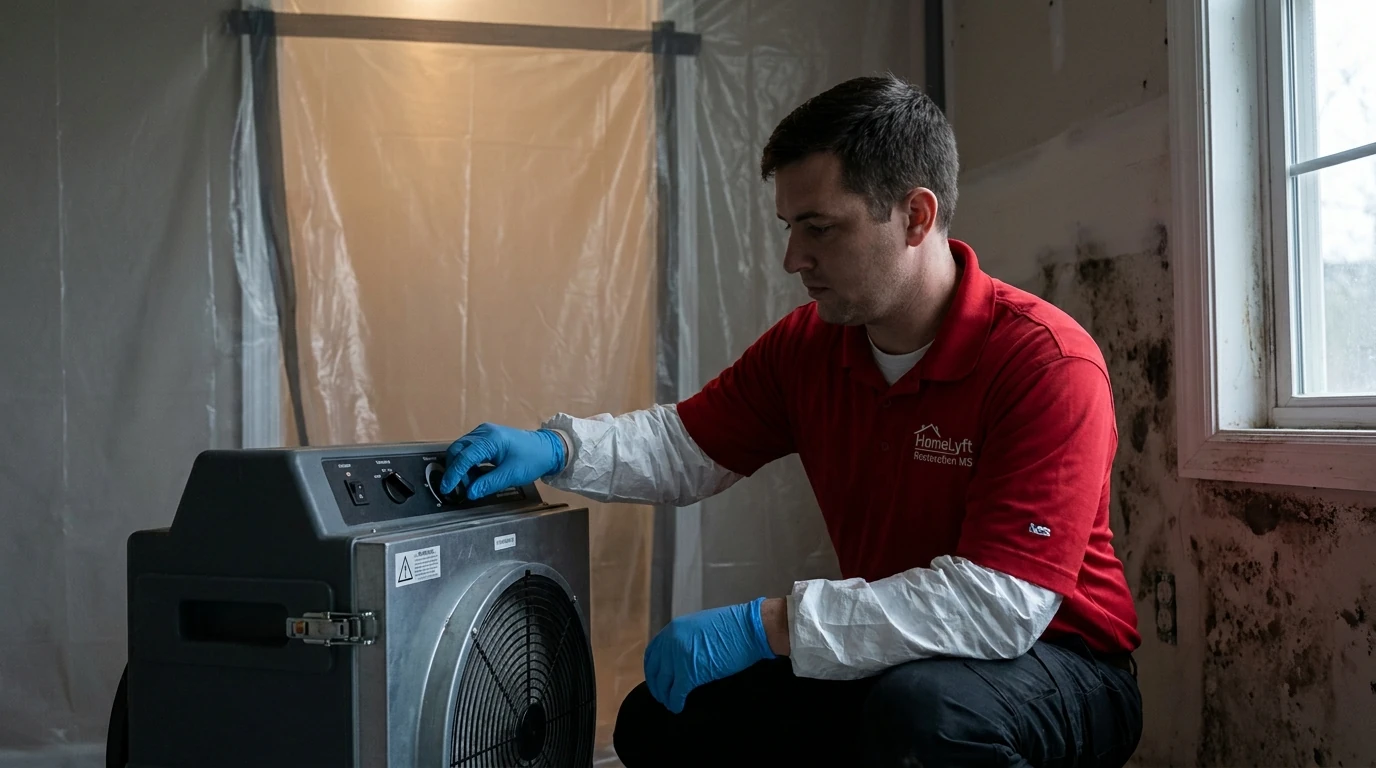
Access changes labor time directly. A crawl space with 18 inches of clearance takes a crew longer per square foot than an open bedroom. Containment, meaning sealed poly sheeting and a negative-air machine to keep spores from spreading to the rest of the house, adds a line item but is standard practice on anything beyond a small isolated spot.
How Much Does Attic and Crawl Space Mold Removal Cost?
Crawl space and attic mold remediation in Gulfport typically runs $1,500 to $6,000, and the biggest cost swing is whether the moisture source also needs to be addressed. Many Gulf Coast crawl spaces trap humidity from the ground and from gaps in vapor barriers, so mold keeps coming back until that’s fixed, not just the visible growth.
That’s why a crawl space job often pairs remediation with crawl space encapsulation: sealing the ground with a vapor barrier, insulating the walls, and sometimes adding a dehumidifier. Encapsulation adds cost up front but addresses the actual cause rather than treating the symptom every year or two. Attic jobs run similar ranges and are usually tied to roof leaks, poor ventilation, or AC condensation lines that have been dripping into the insulation for months.
Does Insurance Cover Mold Remediation in Mississippi?
Most standard Mississippi homeowners policies do not cover mold caused by long-term moisture, humidity, or poor maintenance, and even mold that follows a covered sudden loss, like a burst pipe, often has a separate and lower coverage limit specifically for mold. Review your declarations page for a mold sublimit, which is often capped well below your dwelling coverage.
If the mold grew because of slow, ongoing seepage, a known roof leak, or standing humidity in a crawl space, that’s typically treated as a maintenance issue and excluded outright. If it grew within days of a sudden covered event, like a washing machine hose failure, some policies will pay for remediation up to that sublimit, but documentation matters: photos, the date you discovered it, and a written moisture source finding from an inspection all strengthen the claim. The Mississippi Insurance Department is the state resource for questions about what your specific policy requires.
For rental properties, Mississippi law generally places responsibility for habitability and moisture-related repairs on the landlord, but mold disputes between tenants and landlords can get specific fast. If you’re a renter dealing with mold, document the issue in writing to your landlord and keep a copy; a local landlord-tenant resource or the Mississippi Insurance Department can point you toward state-specific guidance for your situation.
If your mold traces back to a water event, our water damage restoration cost guide covers what that side of the claim typically runs.
What Does Mold Inspection and Clearance Testing Cost?
A standalone mold inspection, including a visual assessment and moisture mapping, typically costs $300 to $600 in the Gulfport area, and air or surface sampling with lab analysis adds $150 to $400 on top of that. Clearance testing after remediation, which confirms spore counts have returned to a normal range before containment comes down, usually falls in a similar range.
Testing isn’t always required. A visibly moldy patch of drywall behind a known leak doesn’t need a lab test to confirm what it is; you can see it. Testing earns its cost when the growth is hidden (behind walls, under flooring), when you need documentation for an insurance claim or a real estate transaction, or when you want third-party confirmation after remediation is done. Our mold inspection and testing page covers what’s included, and our guide on how to test for mold walks through DIY kits versus a professional inspection if you’re trying to decide which route fits your situation.
What Happens During a Mold Remediation Job?
A typical mold remediation job runs five phases: inspection and moisture mapping, containment setup, removal of affected materials, HEPA cleaning and antimicrobial treatment, and a final clearance check. Fixing the moisture source happens alongside removal, not after; removing mold without stopping the water that fed it just means it comes back.
The crew seals off the work area with poly sheeting and runs a negative-air machine so spores don’t travel into the rest of the house during removal. Affected porous materials come out, non-salvageable contents get bagged, and remaining surfaces are HEPA-vacuumed and treated. Once materials are dry and treated, a final check (visual or lab-confirmed) verifies the space is clear before containment comes down and rebuild, if needed, can start.
If you’re not sure whether what you’re looking at is actual mold or just surface discoloration, our black mold vs regular mold guide and our signs of hidden mold post both walk through what to look for before you call anyone.
Mold doesn’t wait for a convenient time, and in a humid Gulf Coast climate, a small patch found near Jones Park or off Pass Road this month can spread through a wall cavity by spring if the moisture source isn’t fixed. Call HomeLyft Restoration MS at (228) 284-5200 to schedule a mold inspection and get a written scope before any work starts.
About HomeLyft Restoration MS
HomeLyft Restoration MS is an IICRC Certified Firm serving Gulfport, Mississippi since 2022 (license RO 2728), holding IICRC AMRT mold remediation certification along with WRT and ASD water restoration credentials. Their crews handle mold remediation, mold inspection and testing, crawl space encapsulation, water damage restoration, fire damage restoration, and reconstruction across the Mississippi Gulf Coast, and the company holds a 5.0 Google rating across 74 reviews.